From Specification and Requirements to Operational Success: Why IMCO Leads in Build to Spec Solutions for Defense Systems
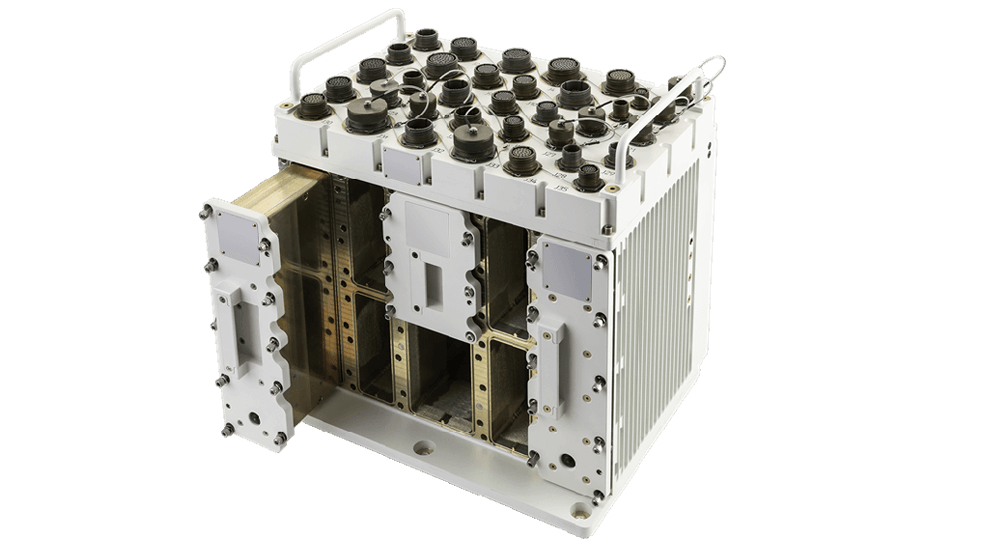 Vehicle Mission Computer
Vehicle Mission Computer
Vehicle Mission Computer
Imagine a defense customer stating: “We need a rugged computer enclosure that withstands +70°C -40°C, maintains stable cooling, integrates multiple subsystems, and passes EMI tests.”
In build-to-spec projects, the supplier leads requirement analysis, system design, prototyping, manufacturing, and qualification – all based on those performance needs, not pre-existing drawings. This approach demands close partnership with the customer, but the payoff is a tailored, fully mission-ready solution, often manufactured at a very tight pace. This is where IMCO’s decades of experience and innovation come to play.
Defense systems operate in some of the harshest environments imaginable: armored vehicles in desert dust, naval systems exposed to salt spray, or avionics equipment tested against shock and vibration. Build to spec enables solutions designed from the ground up to meet these challenges.
Common applications include ruggedized enclosures for mission electronics, thermal management solutions that keep processors stable in armored vehicles, avionics sub-systems that must pass airworthiness tests under strict military standards such as MIL-STDs and DO-160, and control modules that handle critical functions such as hatch operation, power management, or integrated communications.
Tailored to the Mission
At IMCO, these solutions are not generic. They are tailored directly to customer specifications and validated against the most stringent military standard specifications. From electromagnetic interference to wide temperature ranges, each product is designed to meet mil specs and standards with zero compromise.
The process begins with the initial System Requirements Review (SRR), followed by key approval milestones such as the Preliminary Design Review (PDR) and Critical Design Review (CDR). Development then branches into parallel tracks – hardware, mechanical, software, firmware, and STP (System Test Procedure) design – each progressing through initial design, finalization, and approval phases. HW components of the system are tested by HW POD (Proof of Design).
Subsystems are integrated into a platform STP, which undergoes full system integration and testing. This is followed by a comprehensive qualification phase (QUAL) and ATP (Acceptance Test Procedure – production test) execution, leading to formal POD, STR and ATR reports. The flow includes checkpoints, approvals, and update loops to ensure quality and risk management throughout. The modular design of the process enables flexible iteration or pausing of stages, ensuring the final product meets rigorous engineering and operational standards.
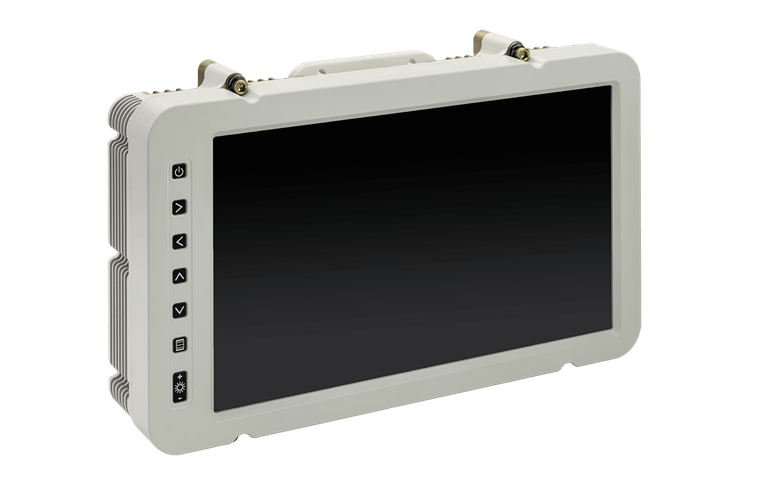
Smart Ruggedized Displays
The strength of Build to spec lies in clarity: clearly defined requirements and a disciplined engineering response. For IMCO, the advantages extend further. With over 50 years of proven experience, IMCO has a track record of direct collaboration with leading defense forces and OEMs, which ensures deep familiarity with their workflows, expectations, and evolving standards.
Defense customers rely on IMCO expertise to help shape specifications, not just respond to them. Unlike firms that only design, IMCO integrates engineering and production under one roof. This ensures every design decision is grounded in manufacturability, maintainability, and lifecycle cost efficiency. Multi-disciplinary expertise – covering hardware, software, mechanics, and thermal design – means IMCO can deliver integrated solutions that are battle-ready.
Perhaps most importantly, IMCO never loses sight of the end-user. Its designs simplify maintenance in the field, often with modular “plug-and-play” units that can be swapped by a single technician in minutes. In a world where skilled manpower is limited, this operational advantage is invaluable. In short, build-to-spec at IMCO does not just mean delivering to requirements – it means delivering smarter, faster, and with the operational reality in mind.
Turning Complexity into Confidence
Of course, build-to-spec projects bring their own complexities. Success depends on disciplined communication, clear documentation, and a strong development process. Any ambiguity in the military specifications can lead to delays, costly redesigns, or certification challenges. This is where IMCO’s advantage is most visible. Its long-standing experience navigating evolving standards ensures compliance with the latest list of mil standards without unnecessary over-engineering.
Its close relationships with customers prevent misalignments, because clients know IMCO is not just a supplier but a trusted partner. By prioritizing systems engineering, IMCO minimizes downstream risks by addressing qualification, thermal budgets, and interface details early in the cycle. The reality is that Build to spec requires more investment at the start of a project, but with an experienced partner like IMCO, it pays off in reduced risk and a smoother path to deployment, not to mention cost efficiency.
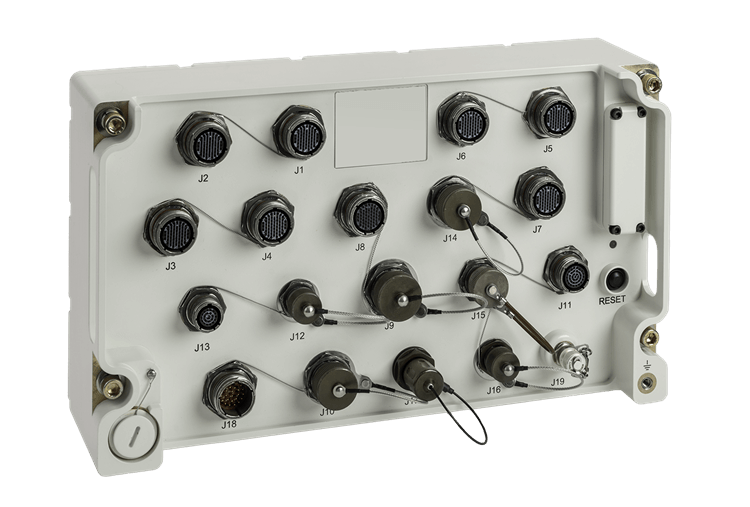
Data, Video and AI Server (DVAI)
In today’s defense industry, off-the-shelf solutions rarely meet mission demands. Build to spec provides the framework for tailored engineering that ensures compliance, survivability, and operational efficiency. IMCO stands out in this field by combining half a century of expertise with integrated design-and-manufacture capabilities, trusted customer relationships, and a track record of delivering solutions that perform in the toughest conditions.
If you are planning a project with complex technical requirements, ask not just for a supplier, but for a partner. With IMCO, build to spec is not just a process – it is a proven path to mission success.

More articles that may interest you
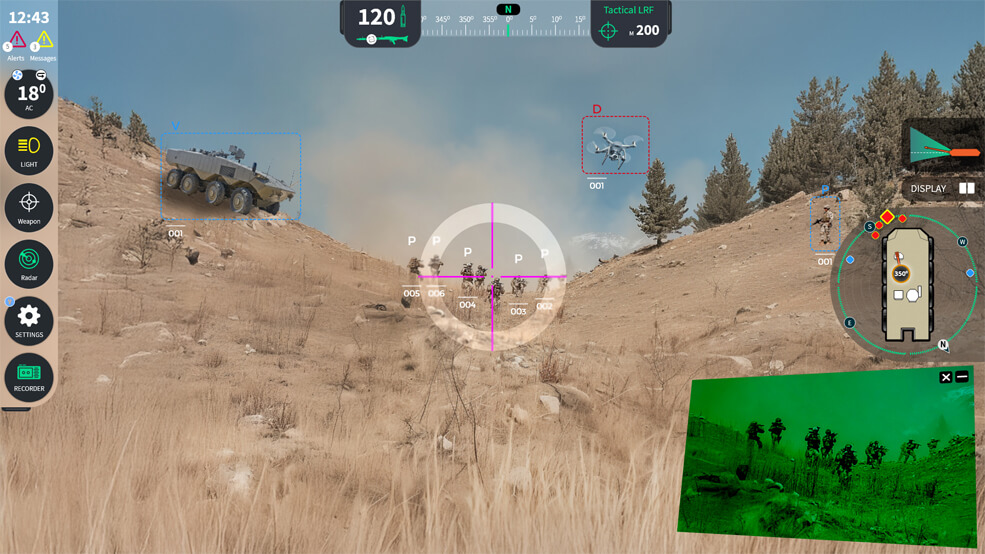
SAVS 360: Transforming Armored Vehicle Operations through AI-Driven Situational Awareness Video System
Optimizing RCWS Performance: The Critical Role of Integrated Infrastructure